
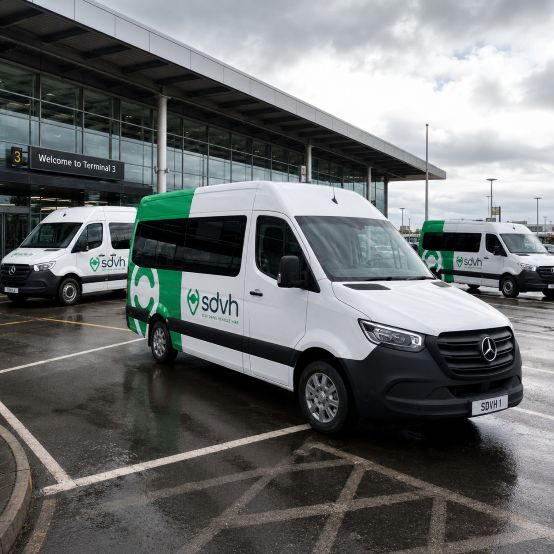









Planning seats, bags and drivers for a group
Give the confirmed passenger number rather than a best guess. List luggage, sports kit or equipment separately, because a full seat count can leave little room for bags. Agree one clear meeting point for the group before travel. Share the intended driver's age and licence details when you enquire, so the team can check eligibility for the size of minibus before quoting.
How the right vehicle is confirmed
Base your choice on how many passengers are travelling, the luggage and who is eligible to drive. Smaller groups may be well served by a 7 or 9-seater, whereas 12, 15 and 17-seat vehicles call for closer checks on licence, age and luggage space. The range includes the Vauxhall Zafira 5 + 2, Galaxy 7 Seater Manual, Galaxy 7 Seater Automatic, 9 Seater Manual and 9 Seater Automatic, depending on dates, driver details and availability. Make, model, transmission, seating, payload and licence position are all confirmed when you are quoted, so treat the vehicles listed as a guide to the kind of hire on offer, not a guaranteed reservation of a particular model.
Counting Passengers and Luggage as Separate Lists
The first decision to settle is whether you count passengers and luggage separately, because a group of twelve with one small bag each presents a different picture from a group of twelve with suitcases, kit bags and a pushchair. Start with a passenger list showing every name, including any children, then build a second list recording each bag with its type and rough size. Note items with unusual shapes, such as skis, instrument cases or folded wheelchairs, and flag anything that may grow between the outbound and return legs. Ask whether luggage can be left with the vehicle during the day, and record the name and number of whoever coordinates the bags. When you request your quote, share both lists alongside the date and preferred delivery point, and ask the team how these details shape the vehicle and driver requirements they confirm for your group.
Setting Up a Return Meeting Everyone Understands
For the return leg of any trip, a clear meeting arrangement avoids long waits and mixed messages, so plan it while enthusiasm is high rather than at the end of a tiring day. Choose a specific point and time, write both down, and share them with every traveller and the main contact. Note what happens if someone is delayed, perhaps a phone number to call or a fallback time agreed in advance, and decide whether the group waits together or travels separately. Record the expected finish time for the day so the team can discuss return arrangements when confirming your price, and ask how a late overrun would be handled before you book. If several passengers are being dropped at different addresses, list the stops in order with a contact for each. Keeping the return plan in writing, and sharing it with the delivery point contact, gives everyone the same expectation.
Explore other minibus hire areas
Things to check before booking
Ahead of confirming the hire, go over the key points: whether the vehicle is available, what the driver needs, mileage, insurance, delivery or collection arrangements and any extras you have asked for. The number of passengers, luggage, driver age, licence entitlement and any D1 requirement should all be checked before the minibus is confirmed. A clear enquiry gives the date, length of hire, rough route, delivery or pickup address, expected passengers or load, and any special requirements that might affect whether a vehicle is suitable.